All posts by Kari Carney

Federal Transportation Reauthorization Bill – take action!

  1. Transportation Infrastructure 

On May 22, the US House of Representatives Transportation and Infrastructure committee passed the Build America 250 Act – the new transportation infrastructure bill that will replace Biden’s good Infrastructure Investment and Jobs Act (IIJA). 

Though the new bill eliminates some of the best sections adopted in the Biden administration, it is not as bad as we had thought. With that said, it still needs a lot of improvements to be a good bill. Here is the good, the bad and the ugly of the new bill:

  • Good – Has language that prevents the cancellation of grants with this language: “the Secretary may not terminate, withhold, or delay the execution of a grant agreement for a grant or award (in part or in whole) made using funds made available under this Act”  
  • Bad – Decreases the amount of guaranteed funding from $539 billion to $474 billion.
  • Ugly – the decreased amount can be mostly attributed to eliminating funding for transit, passenger rail, and competitive grants programs. It does of course increase funding for highways. (needs to add dedicated, guaranteed funding for transit operations and passenger rail)
  •  Good – A dedicated Bridge Repair program was created setting aside $9.2 billion annually. Each state would get $75 million, plus extra depending on specific criteria. 
  • Bad – States have to produce a new report stating their progress on fixing bridges, but there are no real penalties for failing to make progress. (There needs to be real accountability to make progress)
  • Ugly – Though the bill also sets aside $2 billion for a competitive grants program for bridge repair and safety on the federal highway system, the is actually no guaranteed funding for this program and would have to be fought for every year through the appropriations process. (Funding should be guaranteed).
  • Good – bill creates the STAG grant program that includes Reconnecting Communities as an eligible project.
  • Bad – Most of the grants that were cancelled from the previous administration related to the program that included Reconnecting Communities, These projects are unlikely to get approved. (this bill needs to include language to restore all promised grants that were cancelled)
  • Ugly – this bill completely eliminated the Neighborhood Access and Equity Program which focused on reconnecting communities that had been cut or destroyed from bad infrastructure projects.
  • Good – The Safe Streets For All Program is still in the bill! This is a critical program that works to make our streets safer for all road users. and has guaranteed funding! This is the best news of this bill.
  • Bad – The funding for the Safe Streets For All program has been cut almost in half, meaning fewer project will get funded or completed. (This funding should be restored to the previous amount at the very least).
  • Ugly – Vision Zero (a program to eliminate serious injury and death) has been completely eliminated. And the US DOT has already shown that it will not approve projects that reduce parking or repurpose lanes, think complete streets projects. (Vision Zero must be restored and requirements for communities to show real progress). 
  • Also Ugly – Eliminates the Carbon Reduction Program and adds a tax to electric vehicles to pay for this bill. (Needs to reinstate this program).

Here’s what you can do:

Though the bill has passed the house committee, it still has a long way to go, which means the bill could change. Over the summer months, leading up to the September 30th deadline, attend town halls and other congressional events in your area, ask questions and tell your story about how this bill could impact your community and what might make it better. Emphasize your safety concerns, talk about how important complete streets are to revitalizing your community. 

The continued focus on a car-centric transportation system isn’t by accident. There is a lot of money that can be made by the fossil fuel industry, the auto industry, and more. Check out this blog by the Union of Concerned Scientists that focuses on their recent research to look into how much is spent each year to lobby decision makers to maintain the status quo, spoiler alert – it’s $200 million! Check out the blog here.https://blog.ucs.org/kshen/the-highway-lobby-spends-millions-to-make-sure-we-pay-billions/?eType=EmailBlastContent&eId=60b0d08c-be87-4beb-8e7c-25815550da01
Data Centers – the New Land Use Threat.

One of the biggest and hottest land use issues impacting Iowa and the entire country is data centers. Though data centers themselves have been around for a number of years as a way to store all of our online data in the “cloud”, it’s only recently that they have become a very big problem.

About Data Centers

Cloud storage first started to become widely accessible 20 years ago with Amazon’s web services. Over the next six to 10 years, other companies started to offer cloud storage as well, including google. Though “data centers” have been around longer, cloud storage initially started to drive the need for data centers. Most of these facilities were small, relatively speaking.

However, in the last decade with the expansion of Cyber Physical Systems (also known as Artificial Intelligenceor AI) and Crypto Currency and Crypto-mining, the size and number of data centers has increased dramatically. The expansion of massive data centers has also had a huge impact on our communities, resources, and farmland. According to the Lincoln Institute of Land Policy, a mid-sized data center can use as much water as a small town and the large data centers can use as much as a town of 50,000 people. 

Data centers can also consume as much electricity as 10,000-25,000 households! They use a number of tactics to be able to build without residents knowing anything about the impact on resources because they use non-disclosure agreements (NDAs) that elected officials from disclosing any information to the community.

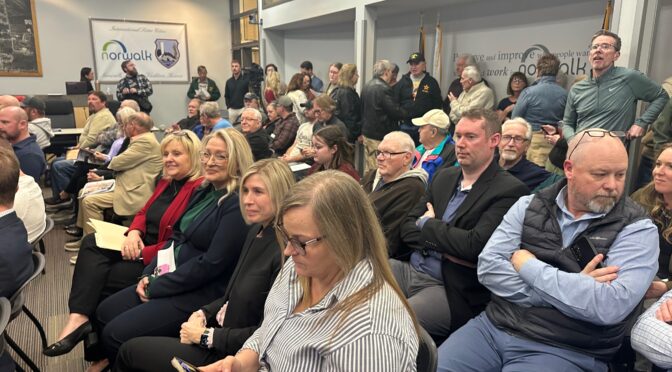
Communities across the country are fighting back. Moratoriums and bans on new data centers and crypto mining facilities are being adopted in multiple communities in states across the nation. City council and county supervisor hearings are packed wall to wall to constituents who oppose them. Iowa is no different.

1000 Friends of Iowa has been involved in efforts to stop or slow the spread of massive data centers in Iowa. Here are three areas that we know of that are currently fighting data centers and areas in Iowa that have taken steps to regulate or ban data centers:

Active Data Center Fights in Iowa:

  • Norwalk, IA (Warren County)
  • Palo, IA (Linn County)
  • Waterloo, IA (Blackhawk County)

Data Center Bans/Regulations in Iowa

  • Madison County – 1 year ban
  • Iowa Couty – 1 year ban
  • Dubuque County – 1 year ban
  • Ceder Falls, IA – passed zoning ordinance to prevent data centers in certain parts of the city near the municipal utility.
  • Cedar Rapids – Adopted regulations that require data centers to have full disclosure of resources used, such as water and electric

What you can do

Help push a ban on data centers until the cumulative impacts can be researched and real regulations can be created. Alos, help push for a ban on the use of NDAs and require transparency and stop using incentives and tax money to attract these to our communities.  Reach out to us for organizing help and sample language. Stay tuned, we are working to pull together an event about organizing against data centers

New Report– DOTs in Conversation

Check out the New Report on Departments of Transportation!

Our transportation system impacts every aspect of our lives, from how we get to work, buy food, visit friends and family, and every to where we live or where development is built. How our transportation system is designed impacts how we get around, how safe we are getting around and, impact our ability to address climate change.  Read the new report on DOTs in the Midwest! and check out the Fast Facts on DOTs!

Transportation is a major source of greenhouse gas (GHG) emissions, accounting for roughly 27% of all GHG emissions in the Midwest. The Departments of Transportation play a key role in shaping our transportation system. State DOTs work with regional organizations such as Metropolitan Planning Organizations (MPOs) to allocate certain federal funds, and conduct statewide planning. They also play a coordinating role across various transportation modes statewide. They own, design and maintain the primary highway systems, including the Interstate system, US highways, and state highways. Though these DOT-owned highways are only about a tenth of the road system by length, they carry a majority of our region’s traffic and are the places where nearly half of our pedestrian fatalities occur. They connect communities, and are often the main streets going through our cities and towns. 

Because of the key role DOTs play in shaping our transportation system, our friends at the REAMP Network, along with key member organizations, like 1000 Friends of Iowa, wanted to better understand state DOTs, and the opportunities that exist when working at the state DOT level to help achieve our goals. We found opportunities in every Midwestern state. This report provides a brief summary of key findings, and then allows you to dig deep into the DOTs of each of the ten RE-AMP states. 

Dig into the report –DOTs in Conversation as well as the Fast Facts document here!

——

Want to learn more about how transportation decisions are made and how you can impact those decisions? plan to attend one of our upcoming Community Transportation Academies this year! Keep an eye on our Transportation Academy Page. More information is coming soon!

2025 Annual Meeting

Join us Saturday, 8 November from 10:30 am until 3:30 pm for great speakers, food, friends and fun! Register today!

Registration for individuals is $35, registration for two people registering together is $60. and Students are $25. Registration includes all Annual Meeting activities, including Speakers, a catered lunch, and snacks and beverages on November 8, 2025. Sign up here!

The theme of our annual meeting is Our Land, Our Food. It includes two great speakers who are doing innovative work related to food production, energy security, food security, and responsible land use.

Our speakers include: Dr. Matthew O’Neal, Professor, Wallace Co-Chair Sustainable Agriculture will speak with us about the Agrivoltaics Research Project they are doing at Iowa State University focused on testing how to grow food crops under solar panels. Large scale solar fields have become a big land use issue in Iowa and around the country, with questions about their impact on the soil, the landscape; and the impact of taking so much farmland out of production and the tension between cleaner energy production. This research is trying to answer these questions. Dr. O’Neal will talk to us about what the research has shown so far and what this could mean for food and energy production in the future. Our second Speaker is Kathy Brynes, Director of the Birds and The Bees Urban Farm. Kathy will talk to us about her work to expand urban farming and why it is so important, especially in the age of climate change. She’ll also talk to us about the City of Des Moines new Eat the Triangles Urban Orchard project that she helped to make happen.  Register today!

In addition to two great speakers and a delicious lunch, hear about what has been happening with 1000 Friends and how you can take action on important land use ad transportation issues.

Community Transportation Academy – Register today!

Registration is now closed for the Des Moines Area CTA

What is The Community Transportation Academy?

The CTA is designed to help bridge the gap between community members and transportation decision makers.

Over 8-10 weeks, participants learn about the basics of transportation planning and decision making, hear from local, regional, and national experts, and dig in on key transportation issues. Participants will also have the opportunity to identify a local transportation problem and propose a solution.

We customize the curriculum for each community/county it is held in. It is designed to help build capacity and engagement by connecting community members with local experts and practitioners, and is an opportunity to build knowledge and skills to solve local problems.

Community members will come away from the academy with the skills and knowledge to advocate for safe and accessible transportation systems that work for everyone.

Who Should Apply to Participate in the Community Transportation Academy?

The CTA is for any community member that wants to be more informed and involved at the local level. Whether you are a transit rider, cyclist, pedestrian, or care about safety; whether you are young or old, this academy is for anyone that cares about safe accessible transportation systems.

What if I have barriers to attending?

We offer a small stipend to those that need it that can be used for child care, transportation, or whatever is needed to make it easier for people to attend.

The academy is a mix of in-person and virtual classes using zoom. The in-person classes will be held at theCentral Community Center at 2008 Forest Ave, Des Moines, IA

Oct. 7 – Dec. 9 – Des Moines, IA Tuesday evenings from 6:30 -8:30 pm. Snacks will be served. If interested, Register Here

This program has been generously funded by General Motors and sponsored by AARP of Iowa. Thanks to our supporters!

Future Academies:

We will be hosting one-two academies in 2026 in the Eastern part of the state. More information to come.

If you would like to bring the CTA to your community, reach out to Kari@1000friendsofiowa.org.

What’s a VRUSA And What Does It Say About Iowa’s Roads?

New Report on State Vulnerable Road User Safety Assessments Released

We’re thrilled to announce the release of the Vulnerable Road User Safety Assessment (VRUSA) Report, created through a collaborative effort by Midwest nonprofits in the RE-AMP Network! This report dives into how state Departments of Transportation in the Midwest are evaluating their efforts to address the safety of people who walk, bike, and roll on our streets.

Walking, accessibility, biking, and transit saw considerable improvements in policy and funding with the adoption of the Bipartisan Infrastructure Law. An often-overlooked piece of those legislative changes was the creation of a new document: the Vulnerable Road User Safety Assessment (VRUSA, also pronounced Ver-roo-suh, for short).

The VRUSA came about because of a significant increase in pedestrian and cyclist crashes that resulted in serious injury and death. The number of serious injuries and deaths in vehicle crashes with pedestrians, cyclists and other vulnerable road users has been increasing since 2020.

According to the Iowa State Patrol, there were 351 traffic fatalities in Iowa in 2024 – 30% of those were vulnerable road users.

The VRUSA is a tool to evaluate how a state Department of Transportation (DOT) understands the issue of traffic violence among people who walk, roll, and bike. It also documents what state DOTs are doing to address and improve the safety of vulnerable road users. 

While every state is supposed to follow the same guidance from the Federal Highway Administration with developing their own VRUSA, that does not always look the same in practice. These documents are essentially self assessments — the onus is on states to evaluate themselves and their efforts. 

In creating their VRUSAs, each state needed to detail their efforts to protect vulnerable road users in five key areas:

  1. Overview of VRU Safety Performance – what trends exist in VRU crashes and what progress is the state DOT making to address this?
  2. Summary of Quantitative Analysis – what data and methodology did the state DOT use to identify high-risk areas of VRUs?
  3. Summary of Consultation – who did the state DOT consult with in the community and what solutions did these individuals or groups offer?
  4. Program of Projects or Strategies – what specific steps is the state DOT taking to reduce VRU crashes?
  5. Safe System Approach (SSA) – how was the Safe System Approach incorporated into the state DOT’s VRUSA?

The first major deadline for states to complete and submit their VRUSA was November 2023. After that, states are expected to update the document as part of their Strategic Highway Safety Plan update, which must be completed every five years. 

1000 Friends of Iowa and others wanted to study this further. Thanks to funding from the RE-AMP Network, 1000 Friends of Iowa, along with our partners 1000 Friends of Wisconsin, Bike Cleveland, Bike Walk KC, Detroit Greenways Coalition, and Transportation Riders United, worked to analyze and compare the VRUSAs of Iowa and five other states. Then, 1000 Friends of Iowa and our partners compiled our work into the findings below:

Click here to read the report: Comparing Vulnerable Road User Safety Assessments in the Midwest

Des Moines Community Transportation Academy Applications Open!

1000 Friends of Iowa is introducing the Des Moines Community Transportation Academy coming this fall. If you’ve ever wanted to learn more about transportation, now is the time! Apply now to attend!

The Des Moines Community Transportation Academy is a 10 week, once-per-week course open to community members and is free of charge for participants. The Academy aims to help bridge the gap between community advocates and transportation planning entities and provides community members with skills and knowledge to advocate for safe, accessible transportation networks that work for everyone.

Check out the syllabus here!

The class will run Wednesdays from 6-8 pm starting on September 25th with 6 in-person classes and 4 virtual. The in-person classes will be held at the Central Community Center located at 2008 Forest Ave. We will have a range of guest speakers who are experts at the local, regional and national levels to discuss a wide range of transportation topics – from public transit, walking, biking, safety, and even how our transportation system was developed. Participants will also have the opportunity to propose a solution to a local transportation problem. Don’t miss this opportunity, apply today!

Who should attend the academy? If you use the bus, walk, bike, drive or otherwise, use the transportation system in the Des Moines metro area, care about safety and accessibility, or just want to learn more about local transportation – this academy is for you!

Applications are open now through September 24th . Follow the link to apply and we will notify participants of their acceptance. Limited stipends are available to those that need them for attendance.

Anyone is welcome to apply!

Stay tuned for more information about our Eastern Iowa Community Transportation Academy coming soon!

For questions, please contact lauren@1000friendsofiowa.org

New Transportation Advocacy Tool Kit!

If we want to ensure responsible, equitable land use; and we want to reduce greenhouse gas emissions for transportation, we have to start doing things differently. In November 2021, The Bipartisan Infrastructure Law was passed. This was a massive bill directing unprecedented amounts of federal dollars to transportation infrastructure – including increased funding for transit, rails, clean transportation, and even some for eliminating some stretches of highways. But it also increased the amount of money that could go to building more highways. This could offset any gains we make from more transit, etc. However, much of these funds are flexible, meaning states and communities have some wiggle room. But our decision makers need to hear from us if we want to make sure that these dollars are spent wisely and in ways that are better for our communities. In the Fall of 2023, along with our partners, we released a report entitled Flex Your Grants: Leveraging Federal Dollars for Clean Transportation. This report looked at various pots of money that could be used for projects that help reduce our reliance on personal vehicles and gives examples for what some cities and states are doing. The Advocacy Tool Kit is a guide on how to influence transportation decisions in your state and how federal dollars are spent. Check out the Tool Kit Here!

Leveraging Federal Funds for Clean Transportation!

This summer, 1000 Friends of Iowa has worked with our partners in Minnesota, Wisconsin and Michigan to ensure Federal Transportation dollars are being spent on clean transportation options, such as transit, and other multi-modal options. As part of this work we commissioned a report from the Shared Use Mobility Center called “Flex Your Grants! Leveraging federal dollars for clean transportation projects.”

This report explores different pots of funding and how it can be used for something other than more highways. The report also gives examples of how the funds have been used in other states & communities. Check out the report here:

Click to access FlexYourGrants_Final_September2023.pdf

Stay tuned for ways you can get involved with influencing how federal dollars are spent!